
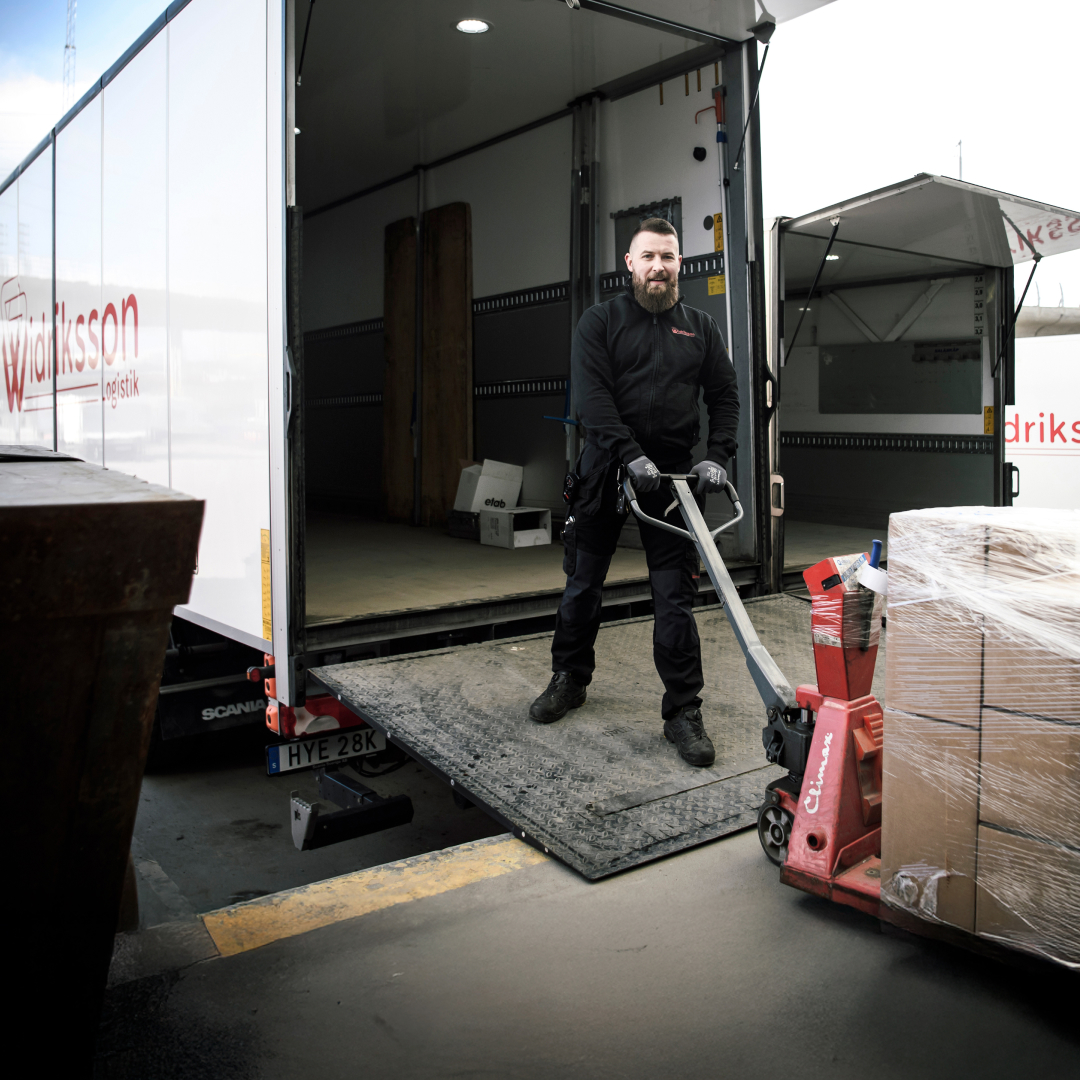
It is early morning and the distribution vehicles roll out from the terminal. On paper, only a few kilometers remain to the end customer. In practice, the most complex part of the entire supply chain is just beginning. This is where the last mile takes over — the stretch between terminal and recipient.
Last mile has become one of the most debated elements in logistics. It is the most expensive, the most labor-intensive, and at the same time the only part of the chain that the customer actually experiences.
From economies of scale to fragmentation
Traditional logistics is built on economies of scale. Large volumes are transported over long distances to central warehouses and onward to regional hubs. Efficiency lies in moving significant quantities of goods to a limited number of recipients. The last mile reverses that logic.
Instead of delivering pallets to a store, individual parcels must be distributed to thousands of addresses — often with specific delivery time preferences. Every stop involves deceleration, parking, identification, handover, and documentation. This is where efficiency is truly tested.
In urban environments, congestion, environmental zones, parking shortages, and increasing regulations add further complexity. At the same time, residential deliveries are inherently less predictable than B2B deliveries. If the recipient is not at home, an additional transport cycle is created, with increased costs as a result.
The hidden cost
Industry estimates suggest that the last mile can account for 40–60 percent of total delivery costs in e-commerce. Several factors drive this:
– Numerous stops with low volume per delivery
– Labor-intensive handling
– Returns management
– Failed delivery attempts
The concept of “free shipping” is therefore, in practice, a strategic business construct. The cost does not disappear. It is redistributed — through product pricing, reduced margins, or efficiency gains elsewhere in the logistics chain.
The customer experience begins at the door
The last mile is also the point where logistics becomes brand experience. The product itself may be identical across multiple retailers. In such cases, price and delivery experience become the differentiating factors.
Clear notifications, flexible delivery options, and reliable time windows directly influence the customer’s overall perception of the purchased product.
A delayed delivery can, for the same reason, undermine the entire buying experience, regardless of how seamless the ordering process was. This makes the last mile an integrated part of the customer journey, not an isolated transport issue.
Within food logistics and temperature-controlled transport, it is even more critical. Here, unbroken cold chains must be maintained, time windows met, and quality ensured – all the way to the store, restaurant, or home delivery. Every stop impacts not only cost and efficiency, but also food safety, sustainability, and customer trust.
The role of technology
Digitalization has fundamentally reshaped the last mile. Real-time tracking creates transparency. Data analytics enables predictive planning. Route optimization systems reduce empty mileage and waiting times. Electrified vehicles are becoming part of the overall customer experience.
Autonomous vehicles and drones are being tested, but at a limited scale. The greatest impact lies in optimizing existing flows rather than in futuristic solutions.
True innovation therefore revolves around better planning, higher-quality data, and continuous improvements in coordination.
The strategic balancing act
At its core, the last mile is a matter of balance:
– Speed versus cost
– Choice versus efficiency
– Growth versus sustainability
Companies that treat the last mile as a strategic function can build competitive advantages through smart warehouse placement, clearly defined delivery options, and data-driven optimization.
As competition intensifies and customer expectations continue to rise, it is no longer the product alone that determines the outcome of a transaction. It is how — and when — it arrives.
The last mile may be short in distance, but in business value, it has never been longer.
Vasatorpsallén 64
253 54 Mörarp