
For a long time, developments in the last-mile sector have been driven by the same forces: faster deliveries, lower costs, and increasing e-commerce volumes.
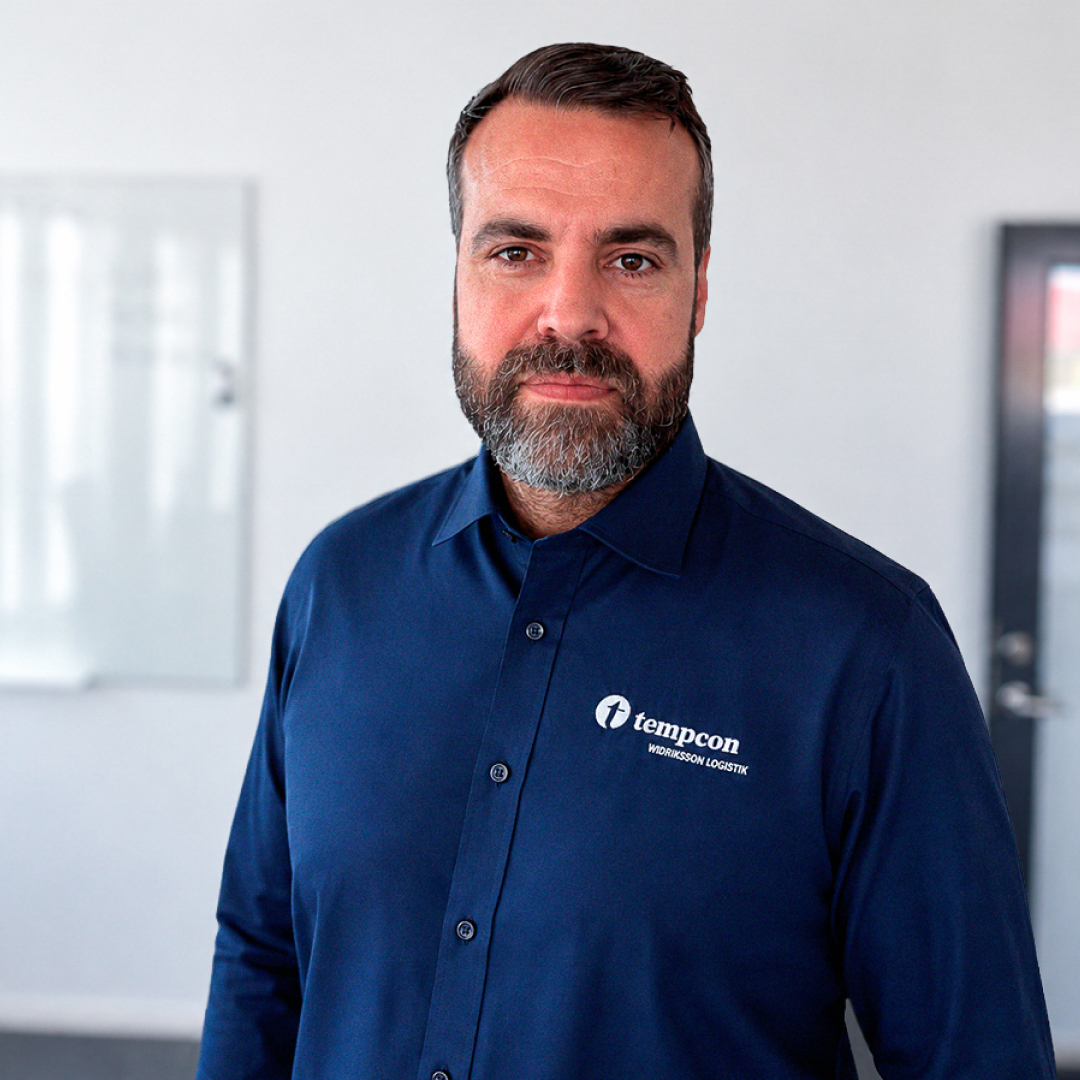
However, according to Foed Meliane, CEO of Tempcon Widriksson Logistik, there are now signs of a shift.
“Recently, we have seen a clear change. Last mile is being valued differently than before. Quality and sustainability now carry greater weight in decision-making.”
He describes it as a gradual transition rather than a sudden break from previous trends. But the direction is clear.
“For many years, there has been an expectation that deliveries should be extremely fast and extremely cheap. We are now beginning to see that era change.”
For a company like Widriksson, this development aligns closely with a strategy it has followed for many years. The company began investing in fossil-free transportation as early as 2006, long before sustainable logistics became a standard requirement in most procurement processes.
It has not always been easy.
The infrastructure for charging electric vehicles was still immature. And when it came to gas-powered vehicles, Foed recalls how the traffic management team had to call gas stations across Stockholm every morning to find out where refueling was actually possible.
“Sometimes the gas was out of stock. Sometimes the pumps were not working. It required considerably more manual effort than it does today.”
At the same time, he believes that the next major step in the evolution of last mile lies somewhere other than transportation itself.
Circularity is one area of growth
As the market for second-hand products expands, so does the need for logistics solutions capable of moving goods between users, handling returns, and extending product lifecycles.
“This is where last mile will play an important role in the future.”
Another key area is data quality.
According to Foed, many of the practical challenges in the distribution chain are not related to transportation itself, but rather to shortcomings in the information accompanying the shipment.
“It can be something as simple as an incorrect phone number or an address that has not been properly registered. Small errors early in the process often lead to major consequences further down the line.”
Despite the rapid pace of technological development, there is another question that interests him most.
How much of logistics can actually be automated?
Internationally, he closely follows developments in drone deliveries and autonomous delivery solutions. However, he does not believe technology will fully replace human interaction.
“Personal interaction still holds significant value. My feeling is that its importance will increase rather than decrease.”
Perhaps this is also where Foed’s vision of the future of last mile becomes most evident.
Technology will continue to evolve. Expectations will continue to rise.
But at its core, logistics is still about trust.
Staying the course
Although Foed follows developments in drones, delivery robots, and automated delivery solutions with great interest, there is one theme that repeatedly returns throughout the conversation: people.
He is convinced that personal interaction will continue to play an important role and may even become more valuable as more aspects of society become automated.
“I believe that everything involving a human touch will be valued more highly in the future.”
It is also a theme that runs through his own journey in the logistics industry. At the age of 21, he started working as a courier driver for Widriksson and quickly became captivated by the pace, the problem-solving, and the complexity of the business.
“What I still find most interesting is making something complex seem simple. Finding solutions that work in the real world.”
After many years in the industry, it is still people who motivate him the most.
And if life had taken a different direction?
The answer comes quickly.
“Then I would have owned a small restaurant with a limited number of tables somewhere along the Costa del Sol.”
Not primarily because of the food, but because of the people.
“I find people incredibly interesting. Meeting people, building relationships, and being part of a social environment—that appeals to me enormously.”
When the conversation comes to an end, it is easy to understand why Foed was drawn to the logistics industry 25 years ago.
It is certainly about transportation. But just as much about people, relationships, and finding solutions when circumstances change.
And that is precisely where he still seems to thrive the most.
Vasatorpsallén 64
253 54 Mörarp